
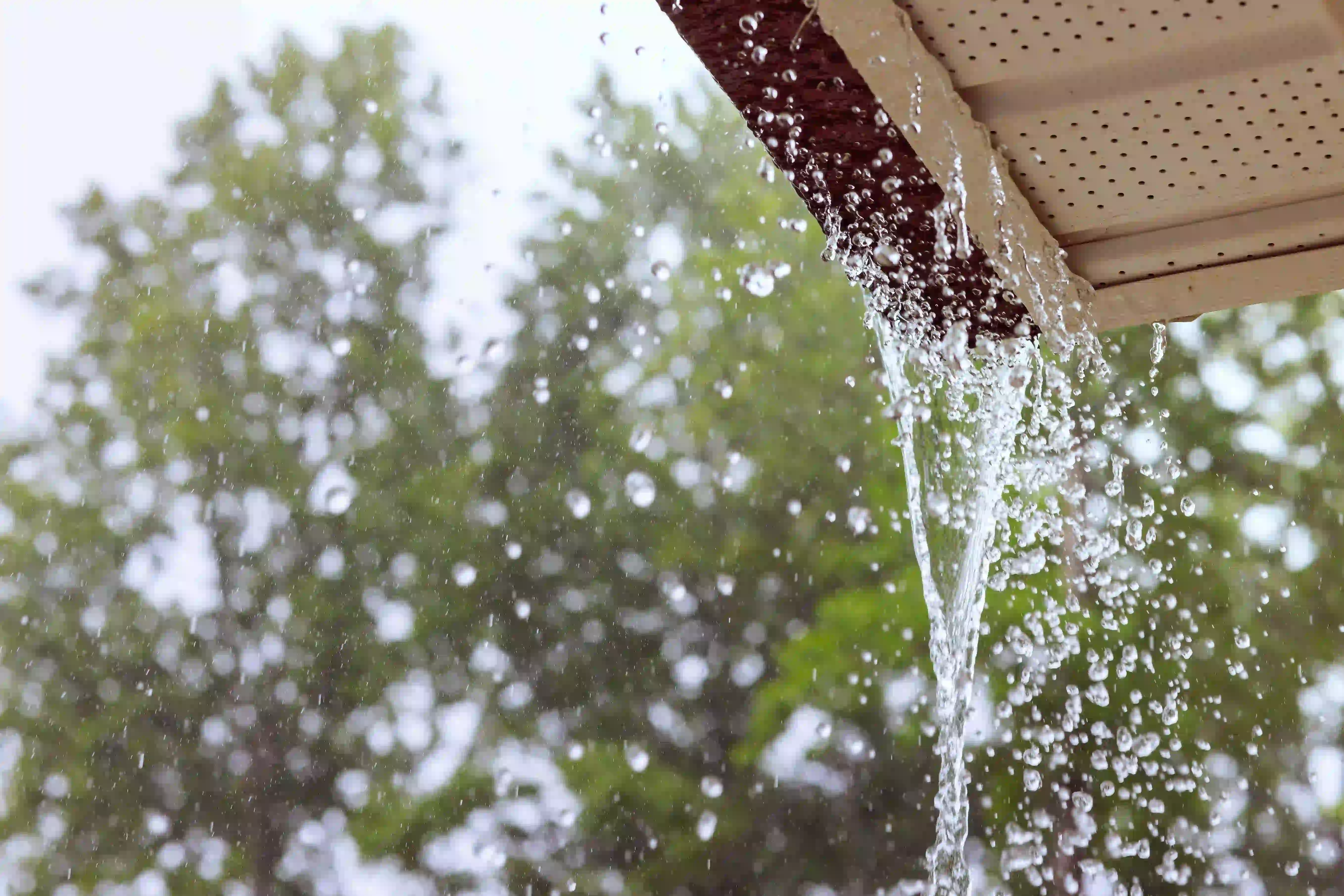
Most homeowners only call a roofer after water shows up on the ceiling. By then the leak has been active for weeks or months and the damage extends well beyond what you can see. The roof itself, the attic insulation, the framing, and sometimes the drywall have all absorbed water. The repair scope is much larger and the cost is much higher than catching the problem early. The good news is that a leaking roof gives you warning signs before water reaches your living space. Twenty five years of roofing work in Massachusetts has taught us what to look for. Here are the five most common early signs of a roof leak that show up before water hits the ceiling.
Granules in Your Gutters or at the Bottom of Downspouts
Asphalt shingles have a coating of small granules that protect the asphalt from UV damage. As shingles age, the granules wash off the surface and accumulate in the gutters. A few granules in the gutter is normal on roofs less than ten years old. Significant granule loss on roofs over fifteen years old means the shingles have lost their UV protection and the asphalt underneath is breaking down fast. Once the granules are gone, the shingles crack and curl within a few seasons. Water finds the gaps and gets under the shingles. Check your gutters and the splash blocks at the bottom of your downspouts. If you see piles of black granules or a sandpaper texture coating the surface, your roof is closer to leaking than the shingles look from the street.
Curling, Cupping, or Missing Shingles
Walk around your home and look at the roof from the ground. Healthy shingles lie flat against the deck. Failing shingles curl up at the corners, cup into a concave shape, or peel back at the edges. Missing shingles after a wind event are obvious. The hidden damage is the shingles that look intact from a distance but are actually loose at the nail line. These shingles let water under during heavy rain or wind driven rain. Massachusetts winters with their wind, ice, and freeze thaw cycles accelerate this damage on roofs over fifteen years old. If you see waves, curling, or missing shingles from the ground, the roof needs inspection before the next storm. The water damage from one bad nor'easter on a compromised roof costs more than full replacement.
Stains on Exterior Siding Below the Roof Line
Water that gets under the shingles or behind the flashing often runs down the wall before it reaches the ceiling inside. The first visible sign is dark staining or streaking on siding or trim directly below the roof eave or below a chimney, dormer, or skylight. The stains are usually vertical streaks that follow the path of the water down the wall. White siding shows the stains most clearly but they appear on any color over time. Look at the exterior walls below your roof line, especially around chimneys, dormers, valleys where two roof planes meet, and roof to wall intersections. Persistent staining in these spots indicates a flashing failure or a shingle gap that is sending water down the wall instead of into the gutter where it belongs.
Sagging Ceilings or Soft Spots in Attic Sheathing
Active leaks show up in the attic before they reach the finished ceiling below. Get a flashlight and check your attic during or right after a heavy rain. Look for water stains on the underside of the roof deck, soft spots when you press on the sheathing, mold or mildew patches on the framing, or wet insulation. Active drips will be obvious if the leak is current. Old water stains tell you the leak has been happening for some time even if the deck is dry today. Ceiling sagging on the floor below is the last warning before water reaches your living space. By that point the insulation is saturated and the rot extends into the framing. Catching the leak in the attic before this happens saves thousands in repair costs.
Frequently Asked Questions
If you see granules in the gutters, curling shingles, or stains on siding, schedule a professional inspection within a few weeks. Active leaks visible in the attic need same week response to prevent damage from spreading. The longer you wait, the higher the repair cost.
Temporary tarping over a confirmed leak source can stop water entry until a contractor arrives. Permanent repair requires identifying the actual leak point, which is often not directly above the visible water inside. We do not recommend permanent self repair on aging roofs because the underlying cause usually extends beyond a single visible spot.
Localized leak repairs run a few hours to one full day depending on the cause. Replacing a section of damaged decking with reroofing of that area takes one to two days. Full roof replacement on aging shingles where multiple leaks indicate widespread failure runs two to five days.
Insurance policies typically cover sudden damage from storms, falling objects, or specific covered events. Coverage for leaks caused by aging or deferred maintenance is limited. We document damage with photos and written estimates that adjusters can review. The homeowner files the claim with their carrier directly.
Annual roof inspections catch problems before they become leaks. Cleaning gutters every fall and spring prevents ice damming and water backup. Replacing flashing during siding or window work prevents leak points from developing at intersections. Replacing aging roofs proactively is cheaper than repairing leaks plus interior water damage.
Get Your Free Roof Inspection in Massachusetts
Worried about a leak? We come out to your home, walk the roof, and send you a written estimate. No fee for the visit.