
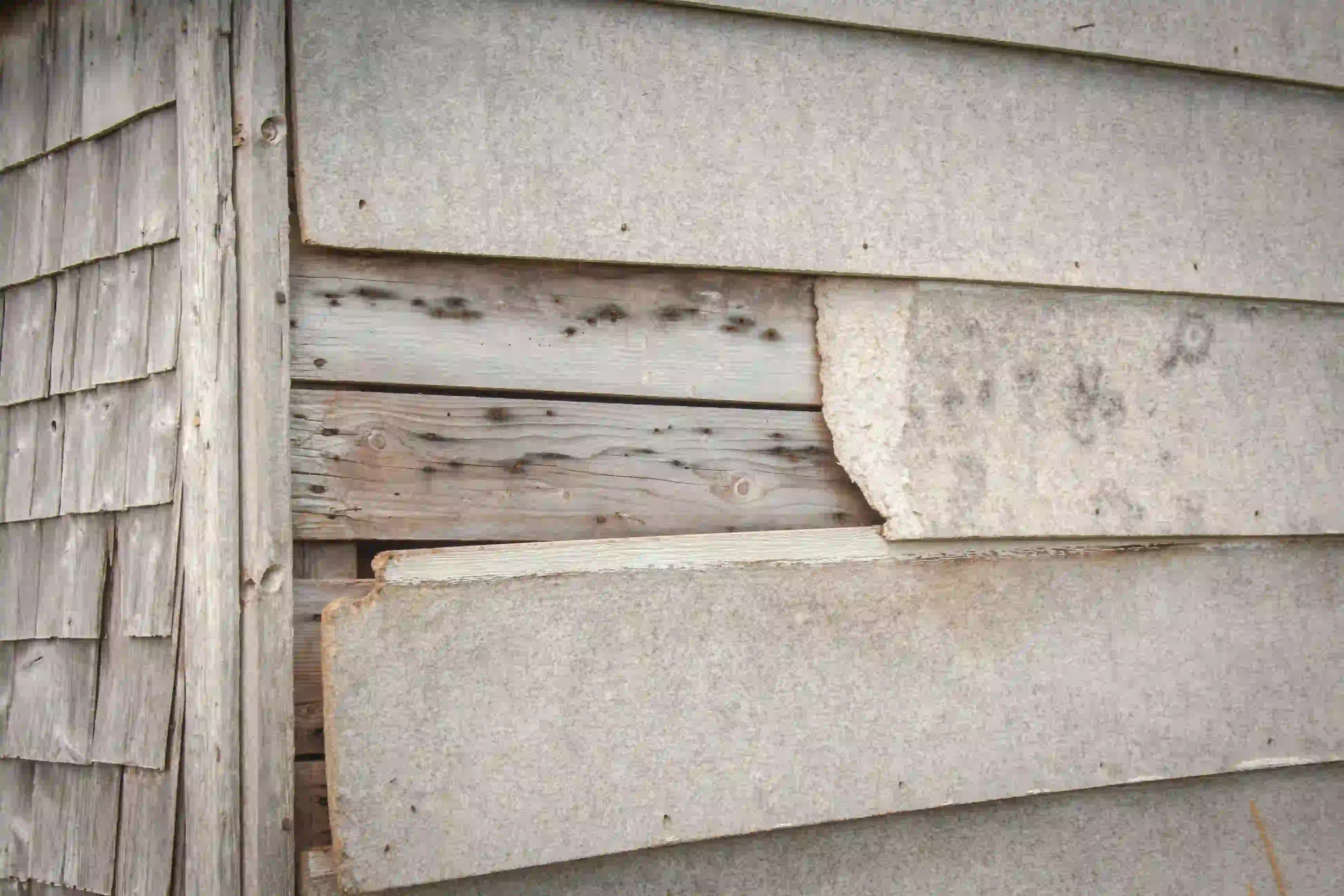
Aging siding does more than look bad. It hides serious damage to the structure of your home. Sheathing rots behind failing siding because water gets through gaps, nail holes, and failed flashing. The rot spreads silently for years before any signs appear from the outside. By the time the homeowner sees soft spots, peeling paint, or visible damage, the rot has already reached the framing in many cases. Massachusetts homes built before the 1990s often have minimal flashing detail at windows, doors, and roof to wall intersections. The original siding may have lasted thirty or forty years but it allowed water entry the entire time. Twenty five years working on Massachusetts homes has shown us that most older homes have some level of hidden rot behind aging siding, especially around windows, at the bottom courses near the foundation, and at corners where two walls meet. Here is what to look for.
Soft Spots When You Press on the Siding
The most reliable test is also the simplest. Walk around your home and press firmly on the siding with the heel of your hand at various points along the wall. Healthy siding feels solid against firm sheathing underneath. Rotted areas feel soft, spongy, or give slightly under pressure. Pay particular attention to the bottom three feet of siding above the foundation, the area below windows, and corners where two walls meet. These are the spots where water collects and where rot develops first. If you find a soft spot, the rot is already significant because firm sheathing has to fail before the siding feels soft from the outside. The repair almost always extends beyond the visible problem area. Address it before the rot reaches structural framing.
Peeling Paint Despite Recent Repaint
Paint failure that returns within a year or two of a fresh paint job is a classic sign of moisture problems behind the siding. Water trapped in the wall pushes back through the paint film, causing bubbling, peeling, and flaking. The paint is the symptom, not the cause. Repainting without addressing the underlying moisture issue wastes money because the new paint will fail just like the old paint. Look for areas where paint failure happens repeatedly in the same locations regardless of how many times the home has been painted. These spots are telling you that water is getting into the wall and cannot escape. The siding above and around these spots needs to come off so the wall behind it can be inspected and any rot addressed properly.
Wood Damage Around Windows and Doors
Window and door openings are the most common entry points for water damage behind siding. Original flashing on Massachusetts homes from before the 1990s was often a single layer of building paper rather than the proper Z flashing and head flashing required by current codes. Water that runs down the siding above a window finds the marginal flashing and gets behind the trim. Decades later, the rot has spread along the framing on either side of the opening and into the rough opening below the sill. Look for soft trim around windows, gaps where the trim meets the siding, dark staining on the wood, or paint that fails repeatedly around the opening. Window replacement projects often expose this rot, expanding the project scope significantly when discovered.
What to Do When You Find Rot
If you find soft spots, peeling paint, or damage around openings, the next step is a professional inspection. We pull a section of siding to inspect the substrate and determine the rot extent. Localized repairs are sometimes possible if the rot is contained. More often, the rot extends well beyond the visible problem and the right answer is full siding replacement with substrate repair as part of the project. We replace damaged sheathing and framing, install proper flashing at all openings and intersections, install new house wrap, and reside with materials that will not allow the same problem to develop. The mold remediation that sometimes accompanies this work is part of the scope. Doing it right means the wall stays dry.
Frequently Asked Questions
Rot behind siding ranges from cosmetic to structural depending on extent. Localized rot in sheathing is straightforward to repair. Rot that extends into framing, sill plates, or rim joists requires structural repair before new siding goes up. Untreated rot continues to spread and compromises the wall structural integrity over time.
Sometimes. Localized rot caught early can be addressed by removing the affected siding section, replacing damaged sheathing, addressing the water source, and patching with matching siding. Significant rot or rot from chronic water issues usually warrants full elevation replacement to address the root cause and prevent recurrence.
Costs vary based on rot extent. Sheathing replacement runs from a few hundred dollars per damaged section to several thousand for full elevation work. Framing replacement adds significantly. Mold remediation when applicable adds more. The estimate after inspection includes the actual scope based on what we find when we open the wall.
Most policies exclude damage from long term water entry and gradual deterioration. Coverage for rot from a specific covered event like a sudden plumbing leak is more likely. Documentation matters. We provide photos and written estimates the homeowner can submit to their carrier. Coverage decisions vary by policy and circumstances.
Localized rot repairs run two to five days. Full elevation siding replacement with structural repair runs one to two weeks. Mold remediation when needed adds time. Larger projects with extensive rot extend longer. We give you a written timeline in the estimate based on the inspection findings.
Get Your Free Siding Inspection in Massachusetts
Suspect hidden rot? We come out to inspect, document the actual condition, and send you a written estimate. No fee for the visit.